TacEdge 2026
International Workshop on Tactical Edge Technologies
Sensing, communications and autonomy in contested environments.
TacEdge is a one-day workshop on sensing, communications and autonomy in contested environments, with invited talks in the morning and hands-on tutorials in the afternoon. The subjects are RF and optical surveillance, tactical telecommunications and applied AI in the field.
The tactical edge is where equipment has to work with contested spectrum, unreliable links and limited on-board computing.
The morning has two keynotes and four short talks. It is free and open to everyone. In the afternoon, each participant attends two of four hands-on tutorials. The tutorials are in addition to the talks, so a paid ticket covers the whole day. It is limited to 80 places.
The workshop is for people who are not specialists in these fields. It suits Defence and defence-industry staff, researchers and students who want to understand current methods and their limits.
TacEdge 2026 is the first of what is intended to become an annual workshop.
Abstract and speaker
Terahertz (THz) communications offer abundant spectrum, ultra-wide bandwidths and highly directional transmission, making them a key enabling technology for 6G and beyond. These properties also open the way to integrated sensing and communication (ISAC), where communication and sensing are designed together so that wireless systems can perceive their surroundings. The talk introduces THz communications in 6G, reviews recent advances in THz ISAC, and discusses key challenges and the open problems in turning its theoretical potential into practice.
Prof. Nan Yang is a Professor at the Australian National University, where he leads the Information and Signal Processing Cluster in the School of Engineering. He is an IEEE Vehicular Technology Society Distinguished Lecturer (2025-2027) and was an IEEE ComSoc Distinguished Lecturer (2023-2024). He is a co-recipient of Best Paper Awards at IEEE ICC 2024 and IEEE GLOBECOM 2022 and 2016. His research interests include terahertz communications, ultra-reliable and low-latency communications, cyber-physical security and molecular communications.
Abstract and speaker
AI-enabled systems now support autonomy and decision-making in operational Defence environments, under uncertainty, adversarial action and time pressure. Their behaviour is learned from data rather than explicitly programmed, and may be shaped by development decisions made long before deployment. This talk looks at AI assurance from a practitioner’s perspective: why conventional verification and validation struggle with machine learning, what further evidence operational use requires, and how technical assurance connects to operational accountability. Drawing on experience in high-reliability organisations, operational test and evaluation, and safety-critical systems, it sets out a set of assurance precepts and a practical framework for assurance across the capability lifecycle.
GPCAPT Randall McCutcheon is a member of the Royal Australian Air Force and the 2026 Chief of Defence Force Fellow. He is a Flight Test Engineer with over 20 years of experience. Randall was appointed a Member of the Order of Australia for exceptional service in the Australian F-35 program and was awarded the United States Defense Meritorious Service Medal for supporting Initial Operational Test and Evaluation of the F-35. Randall is a doctoral candidate in Systems Engineering at the University of New South Wales.
Abstract and speaker
Modern radars are increasingly software-defined, multifunction and adaptive, and their transmissions can change rapidly as they search, track and respond to their environment. For Electronic Support, identifying an emitter remains essential, but understanding what it is doing, and what its changing behaviour means, is becoming equally important. This presentation, developed with Phil Guy, Managing Director of Mellori Solutions, introduces the emerging Signals to Behaviours approach: using sequences of RF observations to infer activities, recognise changes in operating patterns and investigate relationships between emitters, while distinguishing evidence from inference and uncertainty. It then considers how operators will work alongside machine inference: what automated systems should explain, when an assessment should be challenged, and what this means for situational awareness, workload, training and decision-making.
Dr Len Sciacca is Chief Scientist at Mellori Solutions and CEO of ASR Defence. He formerly led the Electronic Warfare and Radar Division of Australia’s Defence Science and Technology Group. His work spans cognitive radar, electronic warfare, signal processing and autonomous systems. With Phil Guy, a former RN and RAN EW operator, his current focus is Signals to Behaviours to Intent: connecting observed RF activity with emitter behaviour and operational understanding.
Provisional. Sessions and timings are subject to change. Session times include introductions and questions.
Four tutorials run in parallel, one in each room, and each runs twice. Every participant attends two of the four, and gives a first and second choice when registering. Each room takes up to 20 people per session. No prior experience with radio, radar or machine learning is assumed. Bring a laptop.
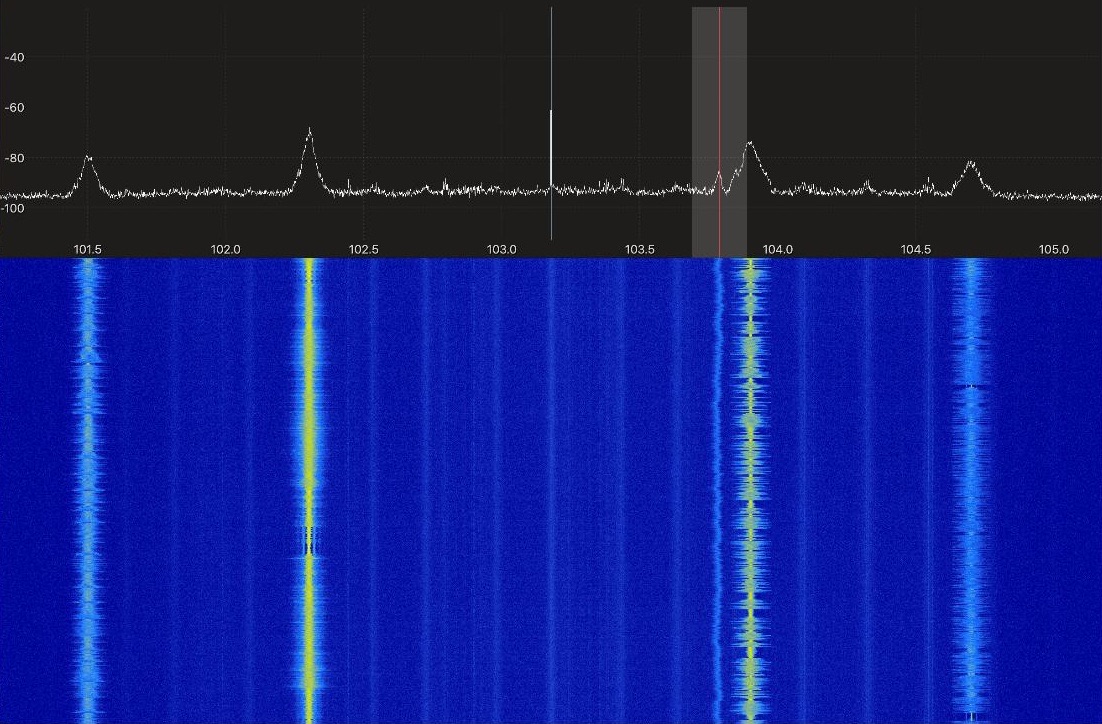
Analysing the EM spectrum with SDR
An introduction to software-defined radio and spectrum monitoring. Participants capture a live band with an SDR receiver and learn to read the waterfall display: which signals are present, when they transmit and how much bandwidth they occupy.
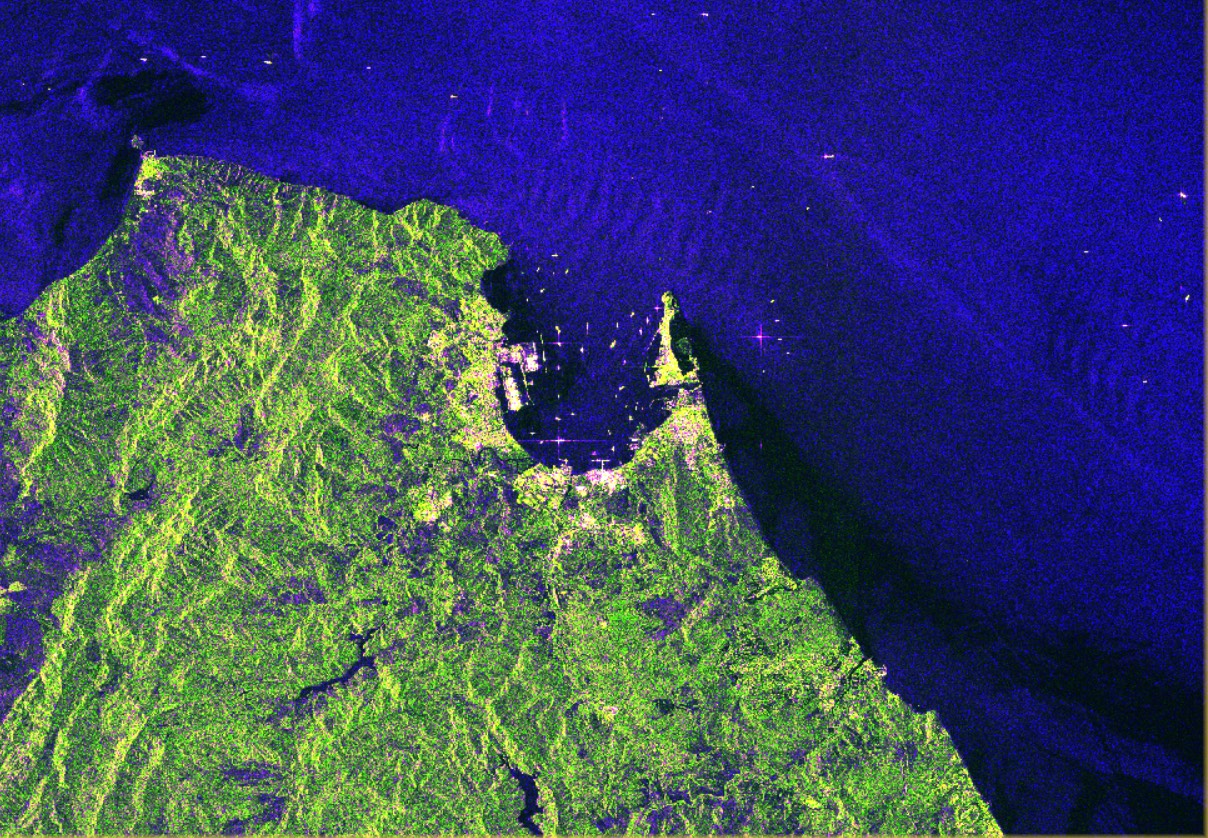
SAR and optical satellite imagery
How to use open satellite imagery as an intelligence source. Participants process Sentinel-1 radar data (calibration, speckle reduction and terrain correction) and compare the result with optical imagery of the same area.
Led by MAJ Matthew Hume and Dr Lily Qiao
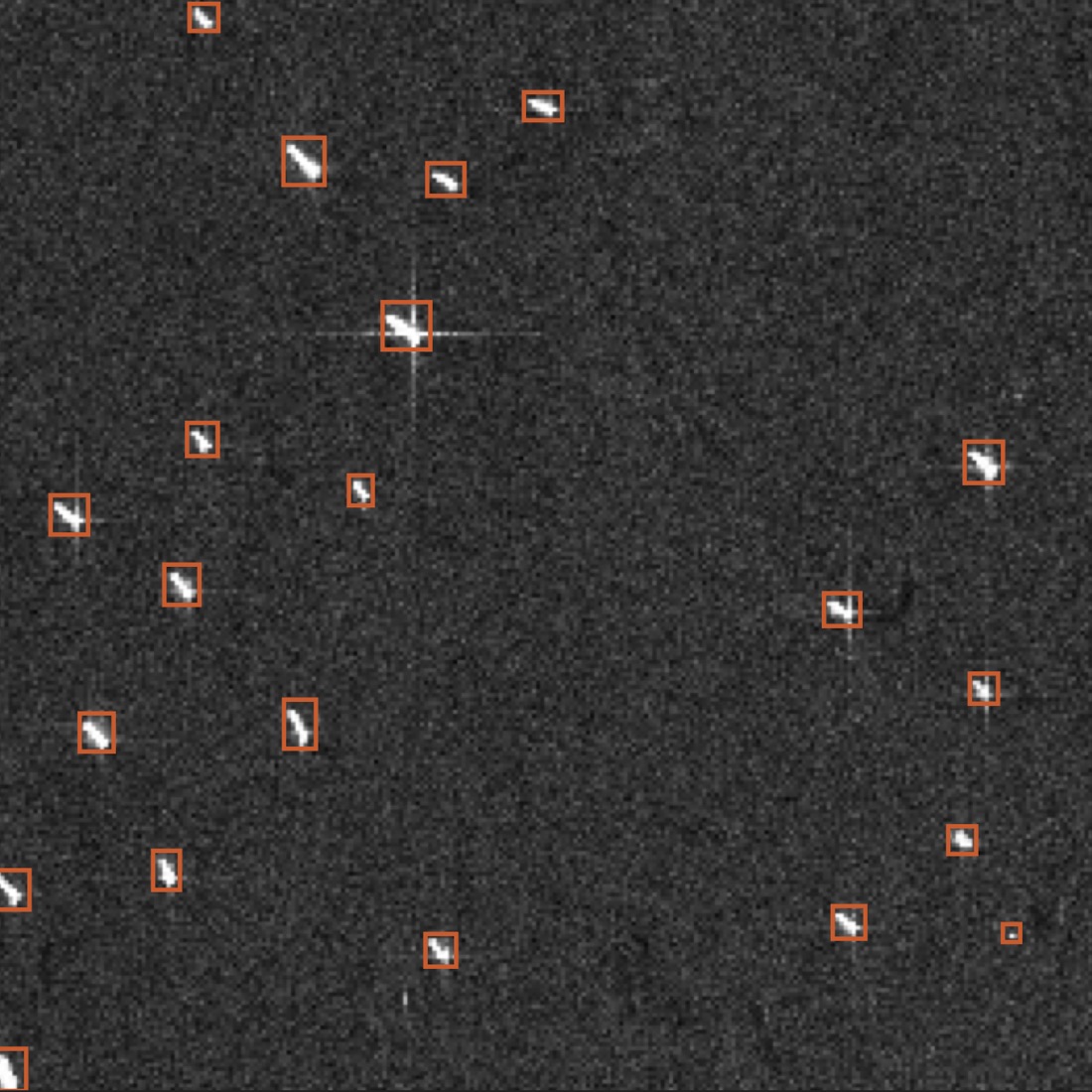
Target detection with deep-learning detectors
Participants train YOLO and similar detectors on real imagery and examine the confidence scores they report, including cases where a confident detection is wrong. The session then shows how an ensemble of detectors reduces misclassification and the number of detections an operator has to check by hand.
Led by Muhammad Saeed and Drew Stevenson
Human-AI interaction at the tactical edge
A scenario-based workshop on how AI and autonomous systems could change the relationship between people and machines in contested, resource-constrained environments. Working in small groups, participants use a structured Prepare-Make-Reflect process to build scenarios involving people, AI systems, autonomous platforms and their operating environment. They then examine how sensing, communications, autonomy and decision-making interact, considering human oversight, trust, responsibility, operational dependencies and unintended consequences.
Led by Dr Josh Andres
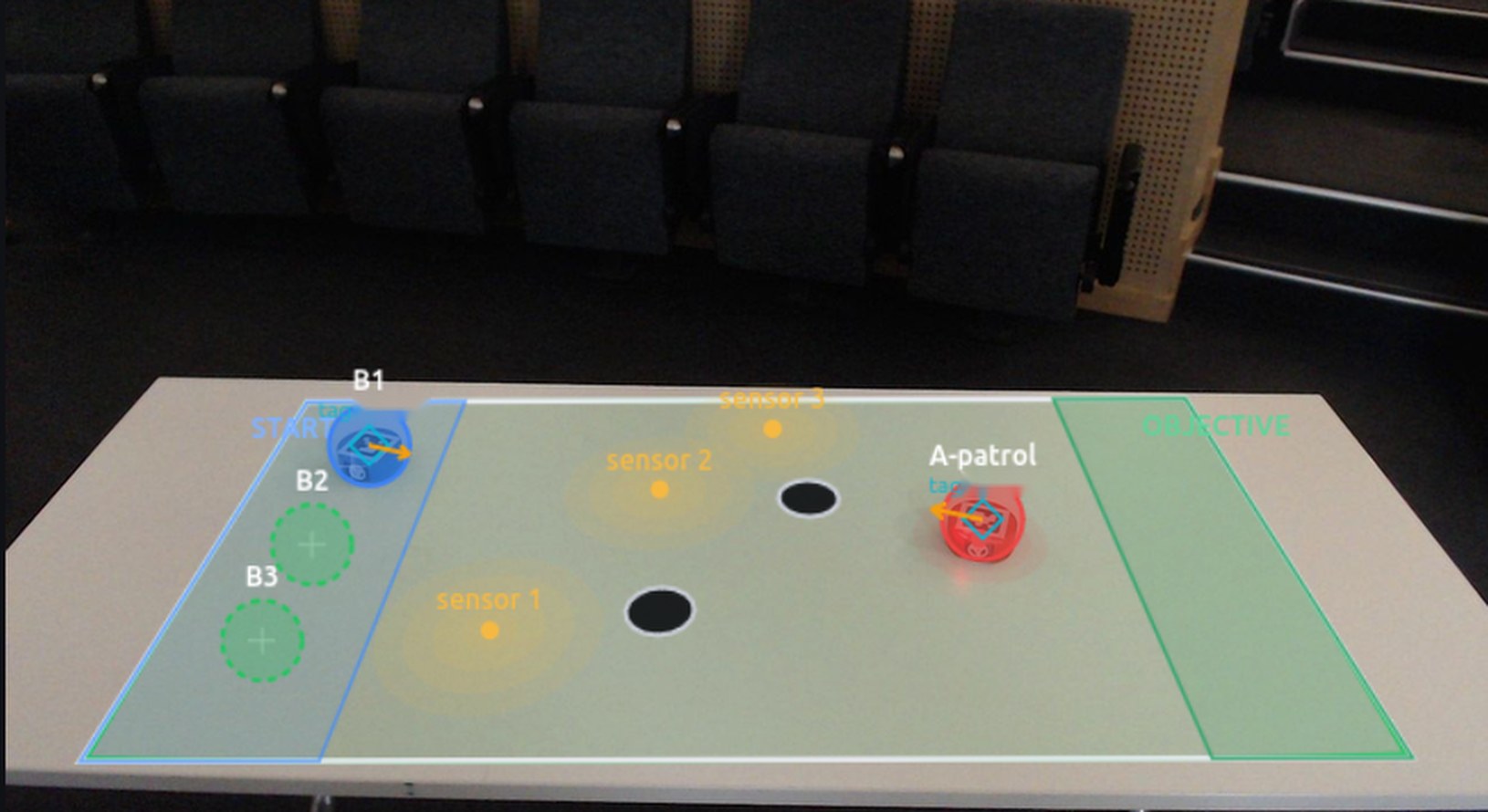
Robot capture-the-flag competition
The day closes with a knockout tournament on Plato Pod, a table-top arena built at UNSW Canberra in which small robots share one playing field with virtual ones. Eight teams of two take part. The early rounds are played in simulation. The final and the third-place match are played with real robots.



In person only, in the centre of Canberra. Attendees are expected from Korea, Taiwan, the Philippines and Vietnam. International visitors should arrange visas early.
The morning talks are free. The afternoon tutorials are in addition to the talks, so a paid ticket covers the whole day.
Full-day fee in AUD, GST inclusive
Group registration is possible. A small number of tutorial places may be offered free of charge to selected participants.
Registration is through UNSW’s Eventbrite page. Payment is by Eventbrite only. Invoices and bank transfers are not accepted. Refunds can be requested within 7 days of purchase. Registration is subject to the UNSW ticketing terms and conditions.